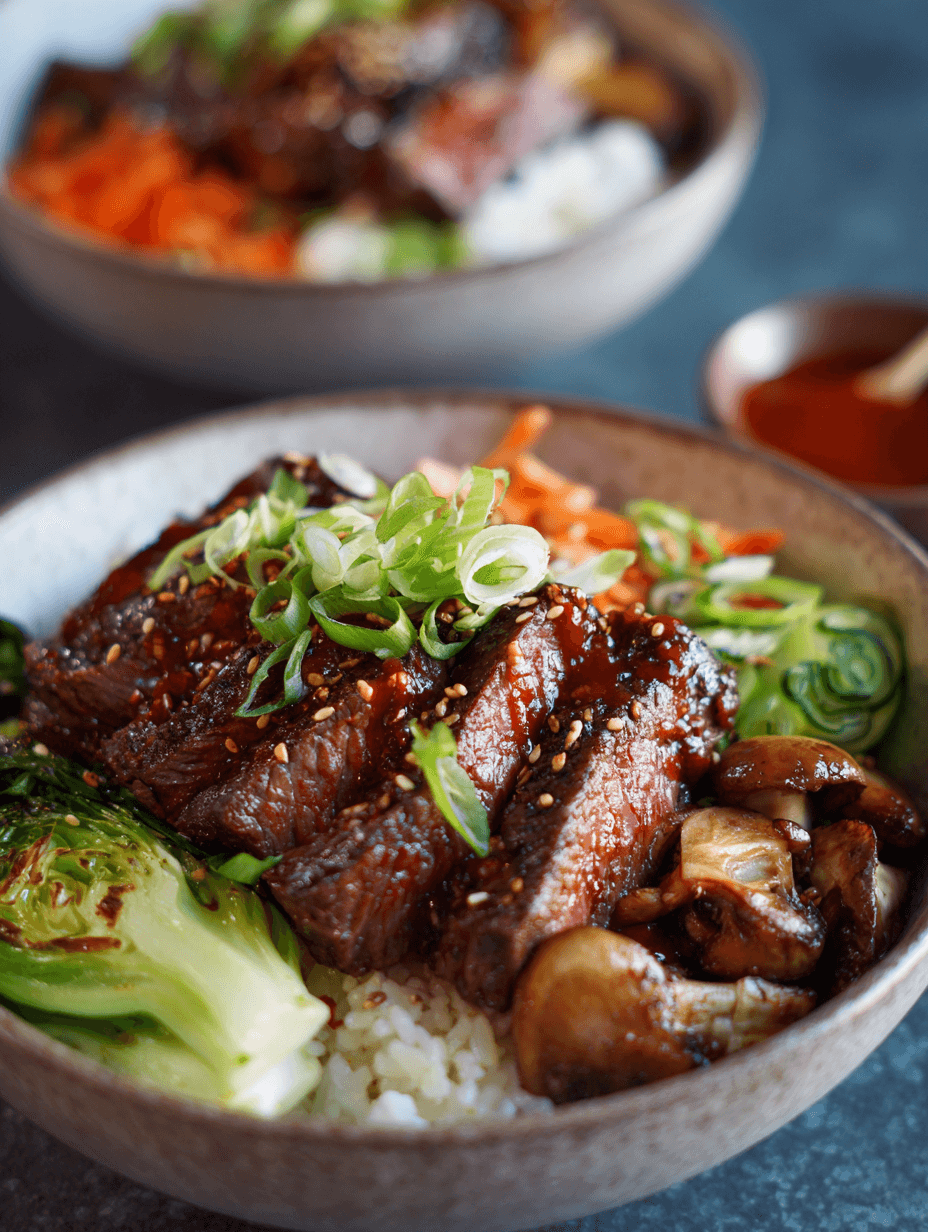
Korean BBQ Steak Bowls
If you love big flavor, sizzle-from-the-skillet vibes, and cozy rice bowl dinners, these Korean BBQ Steak Bowls are about to become your new weeknight obsession.
What Are Korean BBQ Steak Bowls? (And Why We Love Them So Much)
Korean BBQ steak bowls are colorful, flavor-packed rice bowls built around thinly sliced, marinated steak that’s cooked hot and fast—think bulgogi-style steak—then piled over steamy rice with crunchy veggies, a bold Korean BBQ bowl sauce, and usually a little spicy kick.
This version leans on the flavors of classic bulgogi steak bowls: soy, garlic, ginger, brown sugar, sesame, and a touch of gochujang (Korean chili paste) for heat. Everything lands in one generous bowl: Korean style steak rice, fresh veggies, and a drizzle of sauce. It’s basically Korean BBQ dinner, simplified for busy weeknights and cozy enough for Friday movie nights.
I started making these Korean beef rice bowls when my kids were in high school and everyone was coming and going at different times. I needed something I could prep ahead, keep in the fridge, and let people heat and assemble when they walked through the door. These healthy Korean steak bowls fit the bill: easy meal prep, customizable toppings, and—most important—no one complained. That’s a win in my book at 50.
They’re also a lovely “bridge recipe” if you’re easing your family into more Korean-inspired rice bowls. The flavors are bold but familiar, and you can keep the heat as gentle or as spicy as you like.
Why You’ll Love These Korean BBQ Steak Bowls
- Weeknight-friendly: From fridge to table in about 30 minutes (if you marinate ahead).
- Meal prep superstar: This Korean beef meal prep holds up beautifully for packed lunches and grab-and-heat dinners.
- Customizable heat: Make them mild, medium, or “call the fire department” spicy Korean steak bowls.
- Balanced and satisfying: Protein, carbs, and veggies all tucked into one colorful Korean BBQ rice bowl.
- Better-than-takeout flavor: That sweet-salty Korean beef bowl marinade tastes just like your favorite Korean barbecue spot.
- Great for families: Kids can skip the spice, adults can pile on kimchi and gochujang. Everyone builds their own.
- Flexible proteins: Use flank, sirloin, or even thinly sliced ribeye for your Korean marinated steak bowl.
- Gluten- and dairy-flexible: Easy to adjust for gluten-free or dairy-free diets with simple swaps.
- Grill, pan, or air fryer: These Korean grilled steak bowls work with whatever cooking method you love most.
Ingredients You’ll Need
Let’s break down everything you’ll need for your Korean BBQ steak bowls, plus some simple swaps.
For the Korean BBQ Steak
- 1 ½ pounds flank steak or sirloin steak, very thinly sliced against the grain
- Flank is lean and flavorful; sirloin stays tender. Ask the butcher to slice it thin for “stir-fry” or “bulgogi.”
- 3 tablespoons low-sodium soy sauce
- Use tamari or coconut aminos for gluten-free.
- 2 tablespoons brown sugar (light or dark)
- Honey works too, but brown sugar gives that classic bulgogi flavor.
- 1 ½ tablespoons rice vinegar
- Adds tang and balances sweetness; apple cider vinegar is a workable backup.
- 1 ½ tablespoons sesame oil (toasted if you have it)
- 2 tablespoons grated fresh ginger
- Fresh ginger really matters here; it brightens the whole marinade.
- 4 cloves garlic, minced or pressed
- 1–2 tablespoons gochujang (Korean chili paste), to taste
- Use 1 tablespoon for gentle heat; bump it up if you enjoy spicy Korean steak bowls.
- 1 tablespoon neutral oil (canola, avocado, or grapeseed) for cooking
- ½ teaspoon freshly ground black pepper
- 1–2 green onions, thinly sliced (for mixing into the cooked steak or sprinkling at the end)
For the Rice & Base
- 3 cups cooked white rice, warm (about 1 ½ cups uncooked)
- Short- or medium-grain white rice works best for that sticky, restaurant-style feel.
- OR 3 cups cooked brown rice
- For extra fiber and a “healthy Korean steak bowl” twist.
- Optional but lovely:
- 1 teaspoon sesame oil + ½ teaspoon salt to stir through the cooked rice for extra flavor
For the Veggies & Toppings
Mix and match depending on what’s in your fridge—this is where your Korean BBQ rice bowl gets colorful and crunchy.
- 1 medium carrot, julienned or shredded
- 1 cup cucumber, sliced into thin half-moons or matchsticks
- 1 cup shredded purple or green cabbage
- 1 cup bean sprouts (fresh, if available)
- 1 cup kimchi, chopped (add as much or as little as you like)
- 2–4 fried or soft-boiled eggs (one per bowl; optional but so good)
- 2–3 green onions, sliced
- 2 tablespoons toasted sesame seeds
- ½ sheet roasted seaweed (nori), snipped into thin strips (optional)
- Fresh cilantro or perilla leaves, roughly chopped (optional garnish)
For the Korean BBQ Bowl Sauce (Drizzle on Top)
This is your extra flavor punch—the part people will want to lick off the spoon.
- 2 tablespoons low-sodium soy sauce
- 1 tablespoon gochujang
- 1 tablespoon rice vinegar
- 1 tablespoon honey or maple syrup
- 1 tablespoon sesame oil
- 1–2 teaspoons water, to thin as needed
- Optional heat boosters: pinch of red pepper flakes or a drizzle of sriracha
Whisk everything together in a small bowl until smooth and pourable. Adjust with a touch of water if it feels too thick.
Servings & Timing
- Yield: Serves 4 hearty bowls (or 5 lighter portions)
- Prep Time: 20 minutes active prep (slicing, mixing, chopping)
- Marinade Time: 30 minutes minimum; 2–8 hours for best flavor (hands-off)
- Cook Time: 10–12 minutes
- Total Time: About 1 hour (with 30-minute marinade) or up to 2–8 hours including extended marinating
If you’ve already got cooked rice and pre-cut veggies, you can absolutely get this weeknight Korean dinner on the table in closer to 30 minutes.
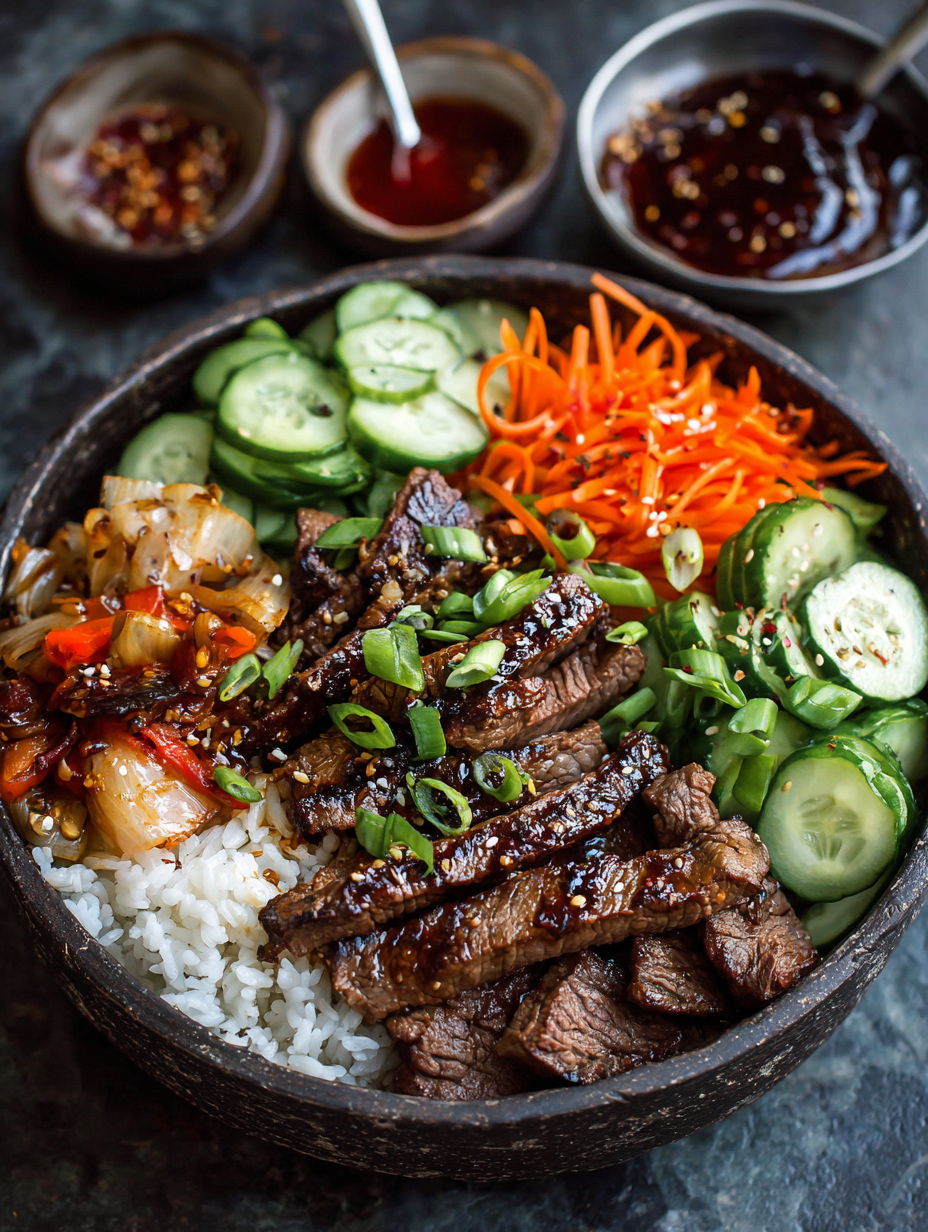
Step-by-Step Directions for Korean BBQ Steak Bowls
Let’s walk through the process. Nothing fancy here—just some slicing, stirring, and a very hot pan.
1. Slice the Steak (Thin is Your Friend)
Place the steak in the freezer for 20–30 minutes first if you have time; slightly firm meat is much easier to cut into paper-thin slices.
Using a sharp chef’s knife, slice the steak against the grain into thin strips, about ⅛ inch thick. This gives you tender Korean barbecue steak that cooks in minutes.
2. Make the Korean Beef Bowl Marinade
In a medium bowl, whisk together the soy sauce, brown sugar, rice vinegar, sesame oil, grated ginger, minced garlic, gochujang, and black pepper.
Taste a tiny bit—this marinade should be salty, sweet, garlicky, and a little spicy. Adjust sweetness or heat as you like.
This is the heart of your Korean marinated steak bowl, so don’t be shy with those flavors.
3. Marinate the Steak
Add the sliced steak to the bowl and use your hands or tongs to gently toss until every strip is coated.
Cover and refrigerate for at least 30 minutes, but 2–4 hours is better. You can marinate up to 8 hours for extra flavor, especially if you’re doing Korean beef meal prep.
If you’re short on time? Even 15–20 minutes at room temperature while you prep the veggies is better than nothing.
4. Cook the Rice and Prep the Veggies
While the steak marinates, cook your rice according to package directions if you haven’t already.
When the rice is done, fluff it with a fork. Stir in a teaspoon of sesame oil and a pinch of salt if you want an extra-savory base.
Meanwhile, prep your toppings:
- Julienne or shred the carrot
- Slice the cucumber and cabbage
- Chop the kimchi
- Slice the green onions
- Toast sesame seeds in a dry skillet for 1–2 minutes if they’re raw (watch closely—they burn fast)
Set everything out in small bowls so assembling your Korean steak rice bowls feels like building your own restaurant bar at home.
5. Make the Korean BBQ Bowl Sauce
In a small bowl or jar, whisk together soy sauce, gochujang, rice vinegar, honey, sesame oil, and a splash of water.
You’re looking for a drizzle-able consistency. If it’s too thick, add a tiny bit more water. Too thin? Add a touch more gochujang or honey.
This is the sauce that takes your Korean grilled steak bowls from “really good” to “no one’s talking because they’re too busy eating.”
6. Cook the Steak Hot and Fast
Heat a large cast-iron skillet or heavy pan over medium-high to high heat. Add the neutral oil and swirl to coat.
Working in 2–3 batches (don’t crowd the pan), add a layer of marinated steak, letting excess marinade drip off.
Cook for about 1–2 minutes per side, until the edges are caramelized and the meat is just cooked through. The pieces are thin, so they’ll cook quickly.
Transfer cooked steak to a plate. Repeat with remaining meat, adding a touch more oil if needed.
If you like, sprinkle in some sliced green onions during the last 30 seconds of cooking for extra flavor.
Tip: You want that sizzling sound when the meat hits the pan—that’s how you get those tasty browned bits that make Korean BBQ steak bowls so irresistible.
7. Optional: Fry or Soft-Boil the Eggs
If you’re using eggs, cook them now.
- For fried eggs, cook in a bit of oil until the whites are set and the yolks are still runny.
- For soft-boiled eggs, simmer for 6–7 minutes, then shock in cold water, peel, and slice.
That runny yolk acts like a silky sauce when it hits the hot rice and steak. Highly, highly recommend.
8. Assemble Your Korean BBQ Steak Bowls
Now the fun part—building your Korean-inspired rice bowls.
For each bowl:
- Add about ¾ cup warm rice as the base.
- Top with a generous scoop of Korean BBQ steak.
- Add small piles of carrot, cucumber, cabbage, bean sprouts, and kimchi around the edges.
- Place a fried or soft-boiled egg on top (if using).
- Drizzle with Korean BBQ bowl sauce.
- Finish with green onions, sesame seeds, and nori strips.
Serve immediately while everything is hot and fragrant. Let everyone add more sauce or kimchi at the table—I guarantee they will.
Easy Variations & Twists
Once you’ve made these once, you’ll probably start improvising. Here are a few ideas I love:
- Low-carb Korean steak bowls: Swap rice for cauliflower rice or a bed of shredded cabbage.
- Korean beef quinoa bowls: Use cooked quinoa or farro instead of rice for extra protein and texture.
- Sheet pan Korean beef rice bowls: Spread marinated steak and veggies on a sheet pan and roast at high heat for a mostly hands-off dinner.
- Korean BBQ tofu bowls: Use extra-firm tofu, pressed and cubed, marinated in the same sauce and pan-seared or baked.
- Extra-spicy Korean beef bowls: Add more gochujang to the marinade and sauce, and sprinkle on red pepper flakes or sliced fresh chiles.
- Grilled Korean steak bowls: Thread the marinated steak onto skewers and grill over high heat for a smoky, backyard-BBQ spin.
Storage, Reheating & Make-Ahead Tips
These Korean barbecue steak bowls might actually taste even better the next day, which makes them fantastic for meal prep.
Storing the components:
- Steak: Store cooked steak in an airtight container in the fridge for up to 4 days.
- Rice: Keep cooked rice in a separate container for 3–4 days.
- Veggies: Store crunchy veggies separately; cucumbers are best eaten within 1–2 days, cabbage and carrots last 3–4 days.
- Sauce: The Korean BBQ bowl sauce will keep in the fridge up to 1 week. Just whisk before using.
Reheating:
- Reheat steak and rice together in a skillet with a splash of water or broth over medium heat until warm.
- Or microwave in 30-second bursts, covered with a damp paper towel to keep moisture.
- Keep the veggies and kimchi cold or room temp so you get that nice contrast when you assemble your Korean beef rice bowls.
Make-ahead strategy:
- Marinate the steak up to 8 hours ahead.
- Cook the steak and rice on Sunday, chop veggies, and portion everything into 4–5 containers—just keep the sauce and kimchi in little cups on the side.
- You’ve got grab-and-go Korean beef meal prep ready for the week.
Notes from My Kitchen to Yours
- Cutting against the grain matters. With thin cuts of beef, this is the difference between tender slices and tough, chewy bites. Look for the lines in the meat and slice perpendicular to them.
- Don’t crowd the pan. When I tried to cook all the steak at once (because I was impatient—yes, it happens), it steamed instead of searing. Smaller batches equal better browning and more flavor.
- Taste your marinade. You don’t taste raw meat, of course, but a little spoon of just the sauce before you add the meat will tell you if you want more salt, sweetness, or heat.
- Gochujang brands vary. Some are sweeter, some are spicier. If you’re new to it, start with less, then add more to the sauce at the end.
- Rice choice changes the personality of the bowl. White rice feels closer to eating out at a Korean restaurant. Brown rice makes these feel like very healthy Korean steak bowls for weekday lunches. Both are delicious—just different moods.
- Veggie flexibility is your friend. I’ve used leftover sautéed spinach, roasted broccoli, even pickled red onions from taco night. If it tastes good and has some crunch or color, it probably belongs on these Asian steak rice bowls.
Frequently Asked Questions
1. Can I use a different cut of beef for Korean BBQ steak bowls?
Yes. Flank, sirloin, ribeye, or even thinly sliced New York strip all work well. Just make sure you slice very thin and against the grain.
2. How spicy are these Korean BBQ steak bowls?
With 1 tablespoon of gochujang in the marinade and sauce, they’re mildly spicy. Add more gochujang or red pepper flakes for spicier Korean steak bowls, or reduce it for a kid-friendly version.
3. Can I make these Korean BBQ steak bowls gluten-free?
Absolutely. Use gluten-free tamari or coconut aminos instead of soy sauce, and double-check that your gochujang is labeled gluten-free (some brands add wheat).
4. What’s the best rice for Korean steak rice bowls?
Short-grain or medium-grain white rice gives that soft, slightly sticky base you get at Korean restaurants. Brown rice or jasmine rice also work well if that’s what you keep on hand.
5. Can I cook the steak in an air fryer?
Yes; spread the marinated steak in a single layer in the basket (you may need a liner), and air fry at 400°F for about 5–7 minutes, shaking once, until cooked and caramelized.
6. How long can I marinate the steak?
Aim for 30 minutes to 8 hours. Beyond 12 hours, the texture can start to change from the vinegar and ginger, so I wouldn’t push it much past that.
7. Are these Korean BBQ steak bowls good for meal prep?
They’re fantastic for meal prep. Store rice, steak, and veggies separately for freshest texture and assemble your Korean beef rice bowls just before eating or reheating.
8. Can I skip the egg on top?
Of course. The bowls are still delicious without it, but the egg adds richness and makes the Korean BBQ steak bowls extra satisfying—like a little built-in sauce.
Wrapping It Up (And Grabbing a Spoon)
These Korean BBQ Steak Bowls bring all the joy of Korean grilled steak bowls—sweet, savory, garlicky beef; steamy rice; crunchy veggies; and that little kick of heat—right to your kitchen with simple, everyday ingredients. They’re flexible enough for busy weeknights, fun enough for casual entertaining, and sturdy enough for make-ahead lunches.
If you try these Korean BBQ steak bowls, let me know how your family builds theirs—who goes heavy on the kimchi, who piles on the sauce, who skips the egg. Leave a comment, rate the recipe, or check out my other Korean-inspired rice bowl recipes for more easy weeknight Korean dinner ideas.
Read next
Dinner
Best Low Carb Garlic Butter Mushrooms
Discover best low carb garlic butter mushrooms - tasty, keto-friendly side dish that's easy to make in minutes.
Dinner
Best Low Carb Roasted Tomatoes with Garlic
Discover the best low carb roasted tomatoes with garlic for tender, flavorful sides and quick, healthy meals.
Dinner
Caprese Skewers
caprese skewers: fresh mozzarella, tomatoes, and basil on a stick for easy, elegant bites. Learn more.
Dinner
Cauliflower Mac and Cheese
Discover a creamy cauliflower mac and cheese that's comforting and lighter, with simple tips for a veggie-packed dinner.
Dinner
Diabetic Air Fryer Frozen Broccoli
Discover diabetic air fryer frozen broccoli that is crisp, convenient, and diabetes-friendly with minimal oil.
Dinner
Diabetic Bacon Wrapped Smokies
Discover diabetic bacon wrapped smokies - delicious, low-carb bites that fit diabetic-friendly menus without sacrificing flavor.