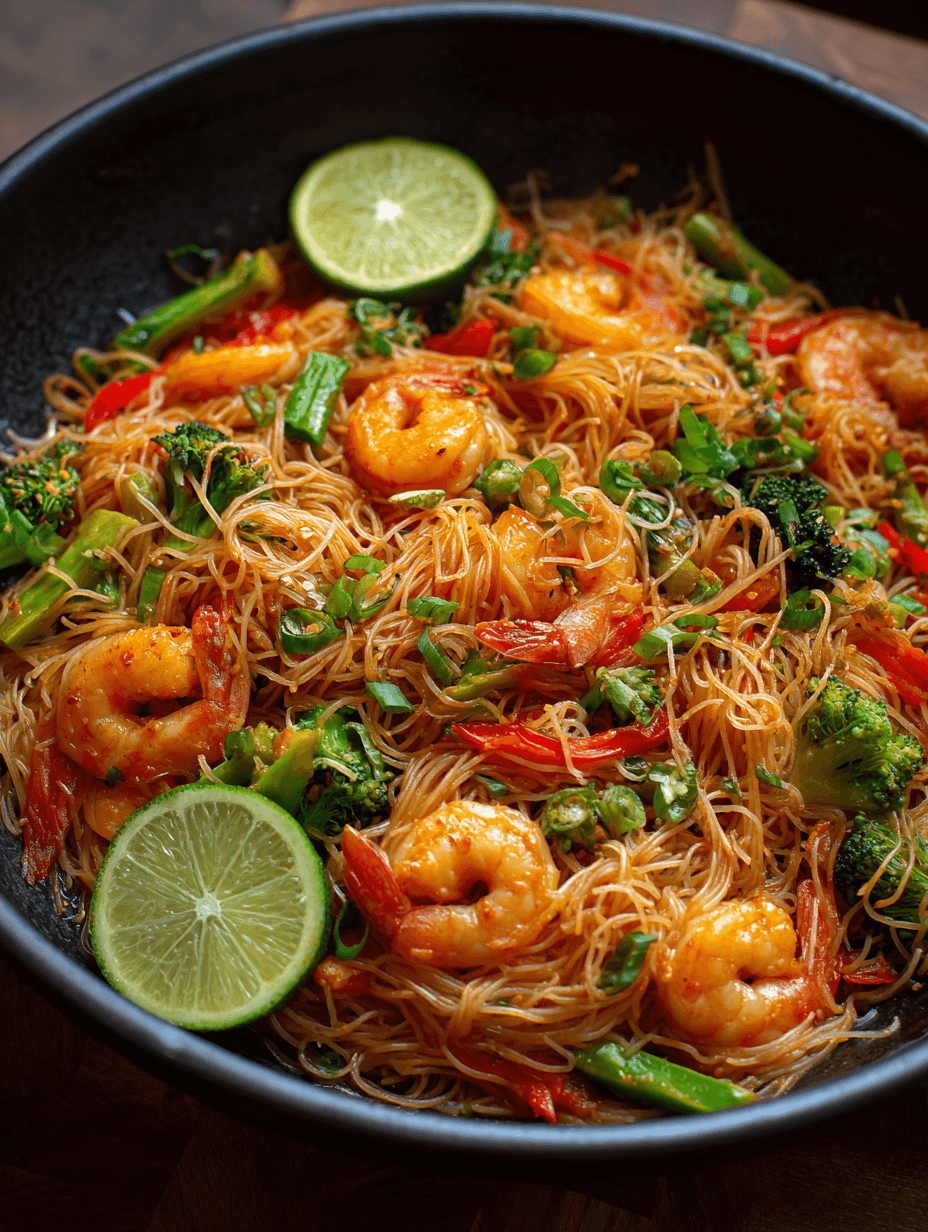
Rice Noodle Stir-Fry (Fast, Flavorful, and Weeknight-Friendly)
If you’re craving something quick, colorful, and full of flavor, this Rice Noodle Stir-Fry is your new weeknight hero—tender noodles, crisp veggies, and a glossy garlic-soy sauce that tastes like your favorite takeout, but fresher and faster.
What Makes This Rice Noodle Stir-Fry So Special?
Rice noodle stir-fry has become my “I’m too tired to fuss, but I still want real food” dinner. It’s that sweet spot between comfort food and “I ate my vegetables today,” which, at 50, matters a little more than it used to.
This recipe gives you all the vibes of an Asian rice noodle stir-fry you’d get from a cozy neighborhood takeout spot: chewy wok fried rice noodles, plenty of vegetables, and a savory sauce with just enough garlic and ginger to make the kitchen smell incredible. You can make it as a simple vegetable rice noodle stir-fry or bulk it up into a chicken rice noodle stir-fry, tofu version, or even a teriyaki rice noodle stir-fry if that’s what your family likes.
It’s naturally gluten free (using gluten-free tamari or certified gluten-free soy sauce), easy to customize, and cooks so fast that your rice noodles will probably be done soaking before you’ve finished scrolling through your emails. This is a quick rice noodle stir-fry that feels like a treat but still qualifies as a healthy rice noodle stir-fry—lean protein, lots of vegetables, and no deep-frying.
I like to make this on busy weeknights when everyone’s hungry and a little cranky. It comes together in about 30 minutes, tastes even better than it smells, and it’s a great “clean out the fridge” situation. Use the veggies you already have, toss in leftover chicken or tofu, and you’ve got a homemade rice noodle stir-fry that tastes like you planned it.
Why You’ll Love This Rice Noodle Stir-Fry
- Balanced and flexible – Make it a rice noodle vegetable stir-fry, chicken rice noodle stir-fry, or tofu-based; the base recipe works with almost anything.
- Weeknight-fast – About 30 minutes from chopping board to table, including soaking the noodles.
- Family-friendly flavor – Savory garlic rice noodle stir-fry with a mild, kid-friendly sauce (you can make it spicy for the adults).
- Naturally gluten free – Rice noodles plus gluten-free tamari mean no wheat and still tons of flavor.
- Great for “fridge clean-out” nights – Use up your extra veggies, half bell peppers, and random carrots.
- Meal-prep friendly – Leftovers reheat surprisingly well for lunch the next day.
- Scales easily – Double the sauce, toss more noodles in the wok, and feed a crowd.
- Customizable spice level – Turn it into a spicy rice noodle stir-fry with chili-garlic sauce or keep it mild and cozy.
Ingredients for Rice Noodle Stir-Fry
You know what? Stir-fries are more about technique and timing than perfection. So I’ll give you my “ideal” ingredient list and plenty of wiggle room.
Serves 4
For the Rice Noodles & Protein
- 8 oz (about 225 g) flat rice noodles (pad thai-style, ¼-inch wide – labeled “stir-fry rice noodles” or “rice stick”)
- 1 tbsp neutral oil, plus more as needed (avocado, canola, grapeseed, or peanut oil; avoid extra virgin olive oil here)
- 1 lb (450 g) boneless, skinless chicken thighs or breasts, thinly sliced or firm tofu or shrimp
- For chicken rice noodle stir-fry: use chicken thighs for juicier pieces that don’t dry out.
- For rice noodle tofu stir-fry: use firm or extra-firm tofu, pressed and cubed.
For the Vegetables
Use about 4–5 cups total mixed veggies. Here’s a combo that works beautifully:
- 1 medium red bell pepper, thinly sliced
- 1 medium carrot, cut into matchsticks or thin coins
- 2 cups broccoli florets (small bite-size pieces so they cook quickly)
- 1 cup snap peas or snow peas, trimmed
- 4–5 green onions, sliced (whites and greens separated)
- 2 cups shredded green or purple cabbage (adds color and crunch)
Feel free to swap in mushrooms, bok choy, zucchini, or baby spinach—this is a very forgiving vegetable rice noodle stir-fry.
For the Garlic-Soy Stir-Fry Sauce
This is the heart of the flavor. Think glossy, savory, a little sweet, with optional heat.
- 3 tbsp soy sauce or tamari (use gluten-free tamari for a gluten free rice noodle stir-fry)
- 2 tbsp oyster sauce (or vegan oyster sauce for a vegetarian version)
- 1 tbsp dark soy sauce (optional, for deeper color and richer flavor; you can sub regular soy if you don’t have it)
- 1–2 tbsp hoisin sauce or teriyaki sauce (for a sweeter, more teriyaki rice noodle stir-fry vibe)
- 1 tbsp rice vinegar (adds brightness and balance)
- 1–2 tbsp brown sugar or maple syrup (start with 1 tbsp and adjust)
- 1–2 tsp chili-garlic sauce, sambal oelek, or sriracha (for a spicy rice noodle stir-fry; leave out if serving kids)
- ¼ cup low-sodium chicken or vegetable broth (or water, but broth adds more depth)
- 2 tsp cornstarch (thickens the sauce so it clings to the noodles)
For the Aromatics
- 3–4 cloves garlic, minced (about 1½ tbsp – this is a garlic rice noodle stir-fry after all)
- 1 tbsp fresh ginger, grated or minced (adds warmth and that “takeout” flavor)
For Finishing & Garnish
- 1–2 tsp toasted sesame oil (drizzled at the end for nutty aroma)
- 2–3 tbsp fresh cilantro or Thai basil, chopped (optional but lovely)
- Lime wedges, for serving
- 1–2 tbsp toasted sesame seeds or crushed peanuts, for crunch (optional)
How to Make Rice Noodle Stir-Fry (Step-by-Step)
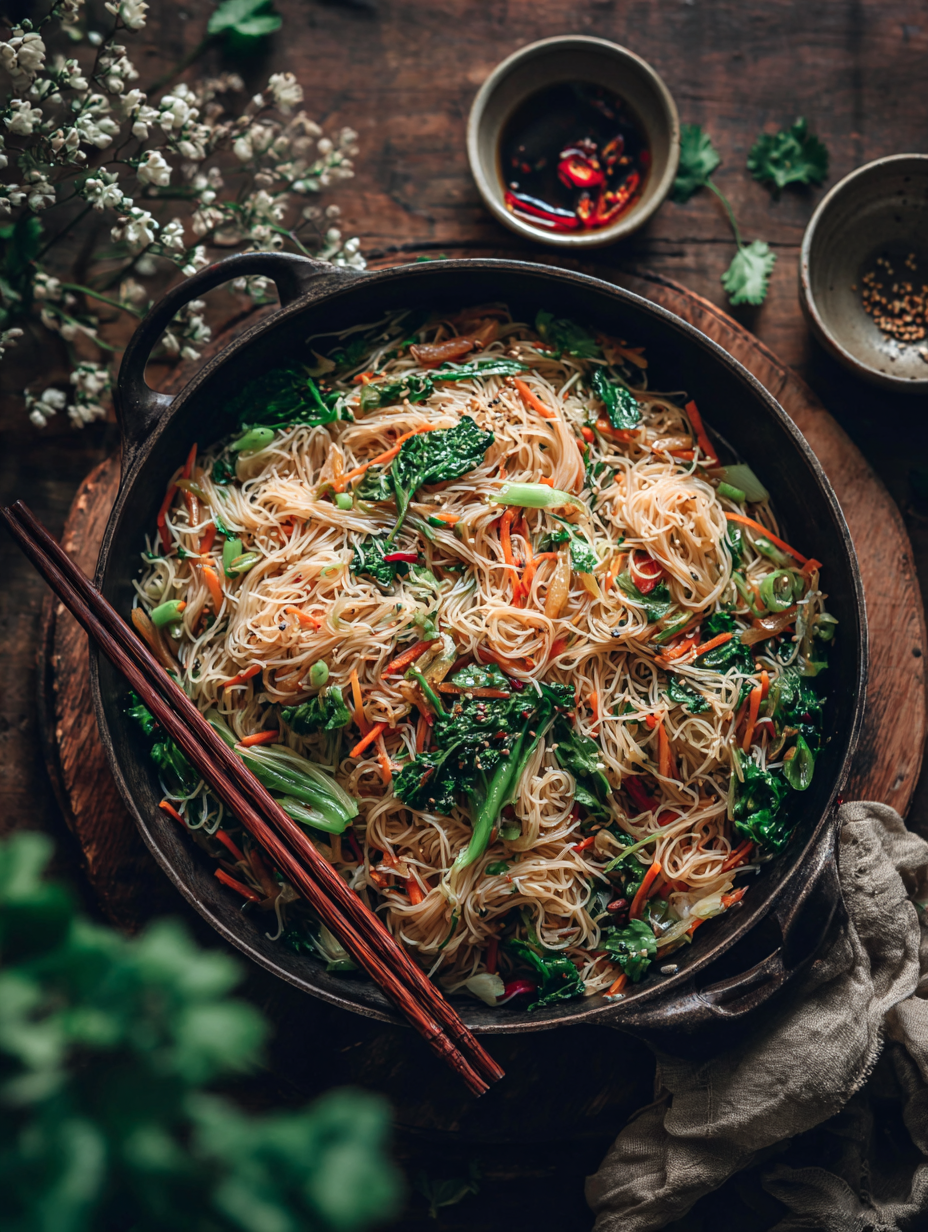
Let me walk you through this like I would my kids the first time they tried using the wok alone.
1. Soak the rice noodles
Place the rice noodles in a large heatproof bowl.
- Pour very hot tap water or freshly boiled water (slightly cooled for a minute) over the noodles to cover.
- Soak 6–10 minutes, stirring once or twice, until the noodles are pliable but still slightly underdone in the center.
Drain well and toss gently with a teaspoon of oil to keep them from sticking. They’ll finish cooking in the wok, which helps prevent mushy noodles.
2. Mix the stir-fry sauce
In a small bowl or measuring cup, whisk together:
soy or tamari, oyster sauce, dark soy (if using), hoisin or teriyaki, rice vinegar, brown sugar, chili-garlic sauce, broth, and cornstarch.
Taste it. It should be salty-sweet, garlicky (from the chili-garlic, if you used it), and a little tangy. Adjust sweetness or heat as you like. This becomes your glossy soy sauce rice noodle stir-fry base.
3. Prep your protein
Pat your chicken (or tofu or shrimp) dry with paper towels.
- Toss with a pinch of salt, a few grinds of black pepper, and 1–2 teaspoons of soy sauce.
- If you like, add 1 teaspoon cornstarch for a softer, “velvety” texture like many restaurant-style Asian rice noodle stir-fries.
Thin slices cook faster and stay tender, which is exactly what we want for a weeknight rice noodle stir-fry.
4. Heat your wok or skillet properly
Set a large wok or a 12-inch skillet over medium-high heat.
- When it’s hot, add 1 tablespoon neutral oil and swirl to coat.
One trick: if a drop of water sizzles and evaporates almost immediately, you’re good to go.
5. Sear the protein
Add the chicken (or tofu or shrimp) in a single layer.
- Cook without moving it for 2–3 minutes to get a nice sear, then stir-fry another 2–3 minutes until mostly cooked through.
- For shrimp, cook just until pink and curled; for tofu, aim for golden edges.
Transfer the cooked protein to a plate and keep nearby. You’ll add it back later. This step keeps your homemade rice noodle stir-fry from turning into one big crowded pan.
6. Stir-fry the vegetables
If the pan looks dry, add another teaspoon of oil.
- Add the white parts of the green onions, carrots, and broccoli first. Stir-fry 2–3 minutes until they start to soften.
- Add bell pepper, snap peas, and cabbage. Stir-fry another 2–4 minutes; the veggies should be crisp-tender and bright.
You want them cooked but still snappy. Soft, sad veggies are not the goal here.
7. Add the aromatics
Push the veggies to the sides of the pan, leaving a clear spot in the center.
- Add a tiny bit of oil if needed, then the minced garlic and ginger.
- Stir just 30 seconds to 1 minute until fragrant.
Don’t walk away here—garlic goes from golden to burnt very quickly, and burnt garlic will overpower your rice noodle stir-fry.
8. Bring it all together with sauce and noodles
Return the cooked protein and any juices to the pan.
- Add the soaked, drained rice noodles and the green parts of the green onions.
- Give your sauce a quick stir (the cornstarch likes to settle), then pour it over everything.
Use tongs or two spatulas to gently toss, lifting the noodles from the bottom so everything gets coated. Cook 2–4 minutes, until the noodles are tender, the sauce is thickened and glossy, and everything is heated through.
9. Finish with sesame oil and garnish
Turn off the heat.
- Drizzle in toasted sesame oil and toss once more.
- Taste and adjust: add a splash more soy for saltiness, a squeeze of lime for brightness, or a pinch of sugar if it feels too sharp.
Sprinkle with cilantro or Thai basil, sesame seeds, or crushed peanuts right before serving.
Servings & Timing
- Yield: Serves 4 as a main dish (or 3 very hungry adults)
- Prep Time: 15–20 minutes (chopping, soaking noodles, mixing sauce)
- Cook Time: 10–15 minutes
- Total Time: About 30–35 minutes
Perfect for a weeknight rice noodle stir-fry when everyone’s asking “What’s for dinner?” at the same time.
Easy Variations You’ll Want to Try
Here’s the thing: once you’ve got the base recipe down, the fun really starts.
- Street Style Rice Noodle Stir-Fry: Add bean sprouts, extra chili, and a tiny drizzle of fish sauce at the end for funkier, street-food flavor.
- Veggie-Packed Healthy Rice Noodle Stir-Fry: Double the vegetables, halve the brown sugar, and use extra broth in the sauce to keep it lighter.
- Teriyaki Rice Noodle Stir-Fry: Swap hoisin for teriyaki sauce, add pineapple chunks, and finish with extra teriyaki drizzle.
- Extra-Spicy Rice Noodle Stir-Fry: Stir a spoonful of chili crisp or more sambal into the finished noodles and garnish with sliced fresh chilies.
- Peanutty Rice Noodle Stir-Fry: Whisk 2 tablespoons peanut butter into the sauce and thin with a bit more broth for a satay-style twist.
- Eggy “Lo Mein” Style Noodles: Scramble 2 eggs in the pan after the veggies, before adding noodles, for added protein and richness.
Storage & Reheating Tips
This quick rice noodle stir-fry is best fresh, but leftovers are still delicious with a little care.
Storage:
- Let the stir-fry cool to room temperature.
- Transfer to an airtight container and refrigerate for up to 3 days.
Reheating on the stove (best method):
- Add a splash of water or broth to a skillet or wok.
- Warm the noodles over medium heat, tossing gently until hot and loosened.
Reheating in the microwave:
- Add a tiny splash of water, cover (a vented lid or plate works), and heat in 30–45 second bursts, stirring between each, until warmed through.
Freezing:
- I don’t recommend freezing rice noodle stir-fry; the noodles tend to get mushy and break. If you must, freeze in a well-sealed container for up to 1 month and reheat gently with extra sauce.
Make-ahead:
- Prep and chop all vegetables up to 2 days ahead; store in containers in the fridge.
- Mix the sauce and keep it in a jar (shake before using).
- On cooking night, you just soak the noodles, cook the protein, and stir-fry—dinner feels almost already done.
Notes From My Kitchen: What I Learned Testing This Recipe
A few batches of this rice noodle stir-fry taught me a couple of small but important lessons.
- Don’t over-soak the noodles. If the package says 10–15 minutes, check them at 6–8 minutes. Slightly underdone is perfect; they’ll soften when stir-fried. Over-soaked noodles break and turn gummy.
- Work in batches if your pan is small. A crowded pan steams instead of stir-fries. For a smaller skillet, cook half the veggies, then the other half. Combine at the end.
- Use enough heat—but not too much. Medium-high works better than blasting it on high at home, especially if you’re not using a restaurant burner. High heat with too little oil can scorch the sauce.
- Taste and tweak the sauce. Everyone’s “just right” is different. If you prefer sweeter like some teriyaki rice noodle stir-fry recipes, bump up the sugar or hoisin a bit.
- Protein choice matters. Chicken thighs stay juicier than breasts; tofu needs firm pressing for good browning; shrimp should go in last so they don’t overcook.
- A little sesame oil goes a long way. Use it as a finishing oil, not the main cooking oil—it burns easily and can taste bitter if overheated.
FAQs About Rice Noodle Stir-Fry
1. How do I keep rice noodles from sticking together?
Soak them just until pliable, rinse briefly with warm water if they’re very starchy, drain well, and toss with a teaspoon of oil before stir-frying.
2. Can I make this rice noodle stir-fry gluten free?
Yes—use gluten-free rice noodles (most are), swap soy sauce for tamari or coconut aminos, and use gluten-free oyster-style sauce and hoisin if needed.
3. What protein works best in this recipe?
Chicken thighs, firm tofu, shrimp, or thinly sliced beef all work; just adjust the cooking time so the protein is cooked through but still tender.
4. Can I use fresh rice noodles instead of dried?
You can—separate them gently, skip the soaking step, and add them directly to the pan; you may need a splash more sauce or broth since fresh noodles are softer.
5. My noodles turned mushy—what went wrong?
They were probably soaked too long or cooked too long in the sauce; next time, shorten the soak time and keep the final stir-fry to just a few minutes.
6. Is this a good recipe for meal prep?
Yes, especially for next-day lunches; store in the fridge and reheat with a bit of water or broth on the stove or in the microwave.
7. How can I make this healthier?
Boost the veggies, use less sugar, choose lean protein, and use low-sodium soy or tamari—this turns it into a very balanced, healthy rice noodle stir-fry.
8. Can I make this without a wok?
Absolutely—a large, heavy skillet (cast iron or stainless) works well; just avoid overcrowding so the veggies still get some char and color.
Wrapping It Up (And Serving It Hot)
This Rice Noodle Stir-Fry has become one of those recipes I can make on autopilot: a big pan of tender noodles, colorful vegetables, and a glossy garlic-soy sauce that satisfies everyone at the table. Whether you keep it as a simple vegetable rice noodle stir-fry or build it into a chicken rice noodle stir-fry with extra spice, it’s versatile enough to match whatever’s in your fridge and on your mind.
I’d love to hear how you make it your own—do you go extra spicy, extra saucy, extra veggie? Leave a comment with your favorite variation, rate the recipe so others can find it, and if this hit the spot, you might also like trying a rice noodle tofu stir-fry or a lighter teriyaki rice noodle stir-fry next.
Read next
Dinner
Best Low Carb Garlic Butter Mushrooms
Discover best low carb garlic butter mushrooms - tasty, keto-friendly side dish that's easy to make in minutes.
Dinner
Best Low Carb Roasted Tomatoes with Garlic
Discover the best low carb roasted tomatoes with garlic for tender, flavorful sides and quick, healthy meals.
Dinner
Caprese Skewers
caprese skewers: fresh mozzarella, tomatoes, and basil on a stick for easy, elegant bites. Learn more.
Dinner
Cauliflower Mac and Cheese
Discover a creamy cauliflower mac and cheese that's comforting and lighter, with simple tips for a veggie-packed dinner.
Dinner
Diabetic Air Fryer Frozen Broccoli
Discover diabetic air fryer frozen broccoli that is crisp, convenient, and diabetes-friendly with minimal oil.
Dinner
Diabetic Bacon Wrapped Smokies
Discover diabetic bacon wrapped smokies - delicious, low-carb bites that fit diabetic-friendly menus without sacrificing flavor.